
Rapid Prototyping Laboratory
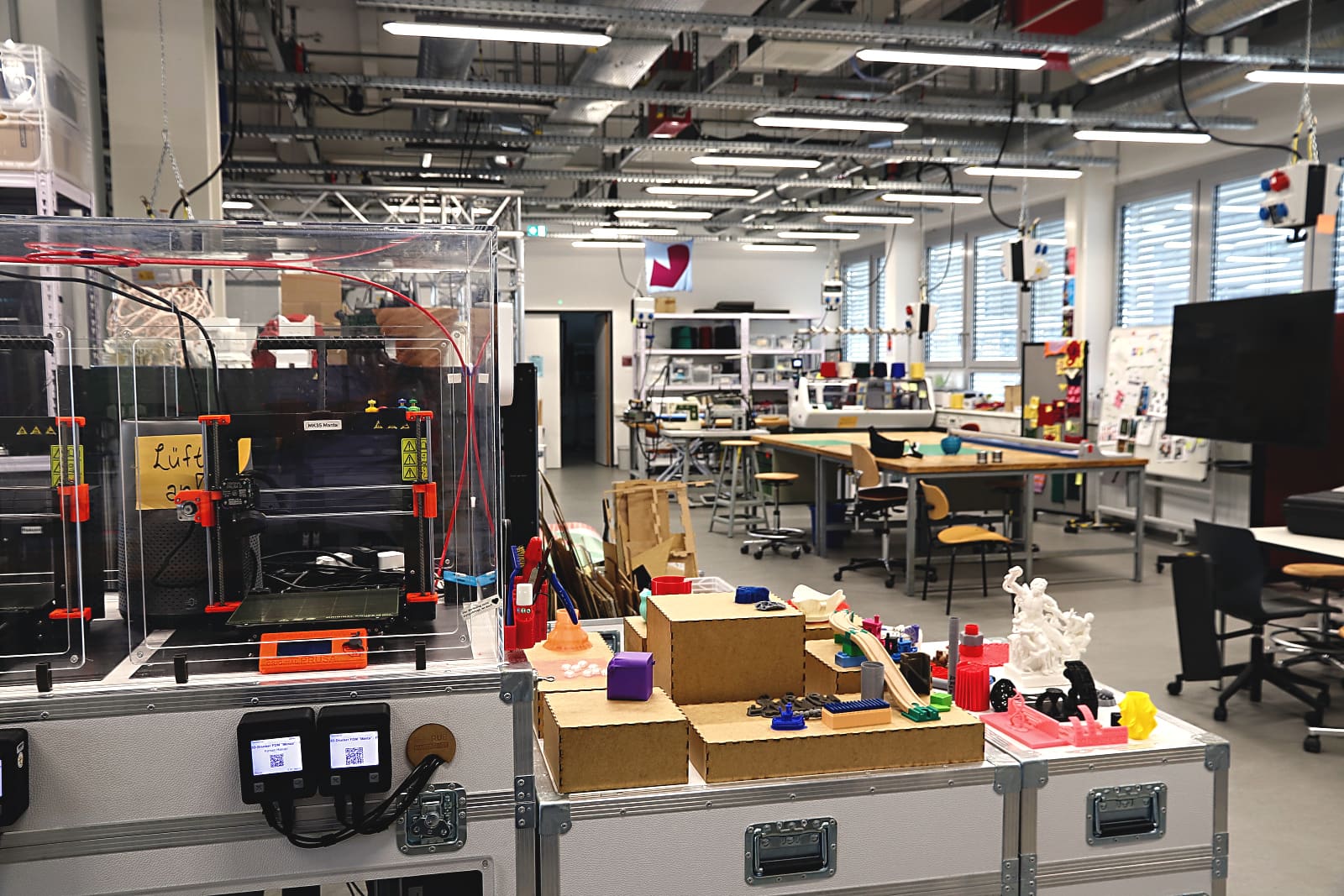
Our Rapid Prototyping Laboratory is a place where you can dive into the world of designing and creating objects and prototypes. Whether it’s 3D printing, laser cutting, robotics, or extended and virtual reality – you’ll find everything you need here to experiment with different materials, manufacturing processes, shapes, and colors.
Who is the contact person for the Rapid Prototyping Laboratory?
title: Isabel Engels
Isabel Engels
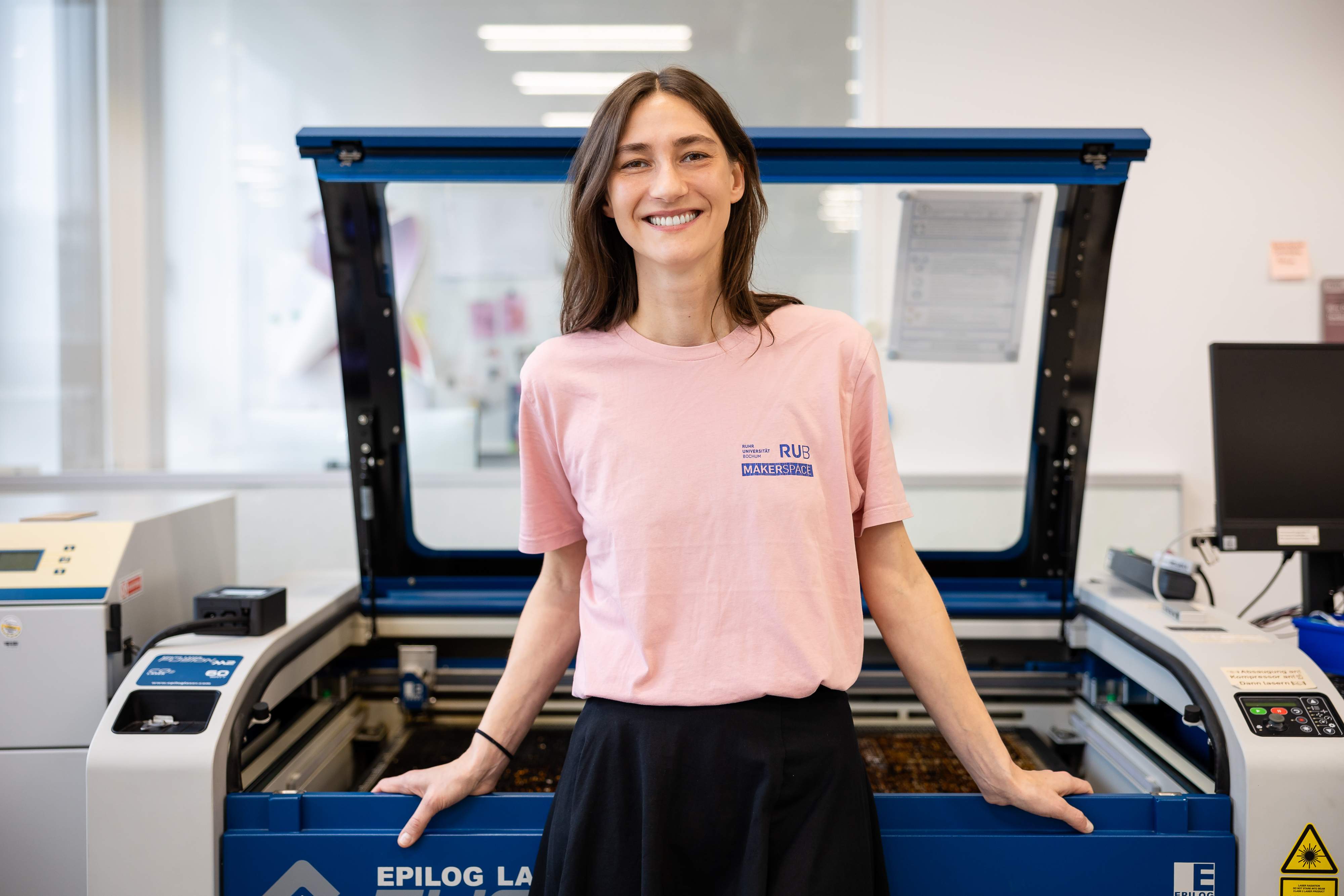
"I’m Isabel (she/her) and head of the Rapid Prototyping Lab. If you’d like to work with our 3D printers (FDM), CO₂ and diode laser cutters, 3D scanners, or the VR and AR equipment, I’m your point of contact. I’ll show you how to use them and support you with any questions about suitable materials, file preparation, and equipment reservations. For planning collaborations or workshops related to the RPL, feel free to reach out to me.
You can also ask me questions about the kitchen lab currently under development, as well as the cutting plotter and transfer press in the textile lab."
- For general inquiries, you can contact our team here.
- For specific questions, you can reach me directly at:
How you can use the Rapid Prototyping Laboratory
For the Rapid Prototyping Laboratory itself, in addition to the General Safety Briefing, you only need a device-specific introduction for the equipment you want to use. After that, you may work independently with most devices. Exceptions include the laser cutter, the large-format 3D printer, and the CoBot; for these, please speak with a team member beforehand. If you would like to receive an introduction to a device, just let us know on site or send us an email.
Go to the 'Rapid Prototyping Laboratory' workspace folder with additional materials
In this folder you will find additional materials for all areas of the Rapid Prototyping Laboratory, such as user manuals, operating instructions, templates and samples, tutorials, and other resources designed to make your work easier.
As always, collaboration makes us stronger — we welcome every contribution to our shared pool of knowledge and experience.
What you can do in the Rapid Prototyping Laboratory
- 3D printing using the FDM process (fused deposition modeling)
- 3D scanning, for example for reverse engineering
- Laser cutting (no metals!)
- Testing and programming robots
- Testing virtual and augmented reality headsets
- Printing and plotting
Below you will find a detailed description of each of these areas.
3D Printers (Plastic Fused Deposition Modeling: FDM)
In fused deposition modeling (FDM), plastic — usually supplied as a wound filament — is heated and extruded through a nozzle onto a build platform. The 3D object, previously created on a computer, is printed layer by layer in deposited paths.
FDM printing is particularly suitable for producing small quantities of 3D objects, lightweight components, and complex geometries.
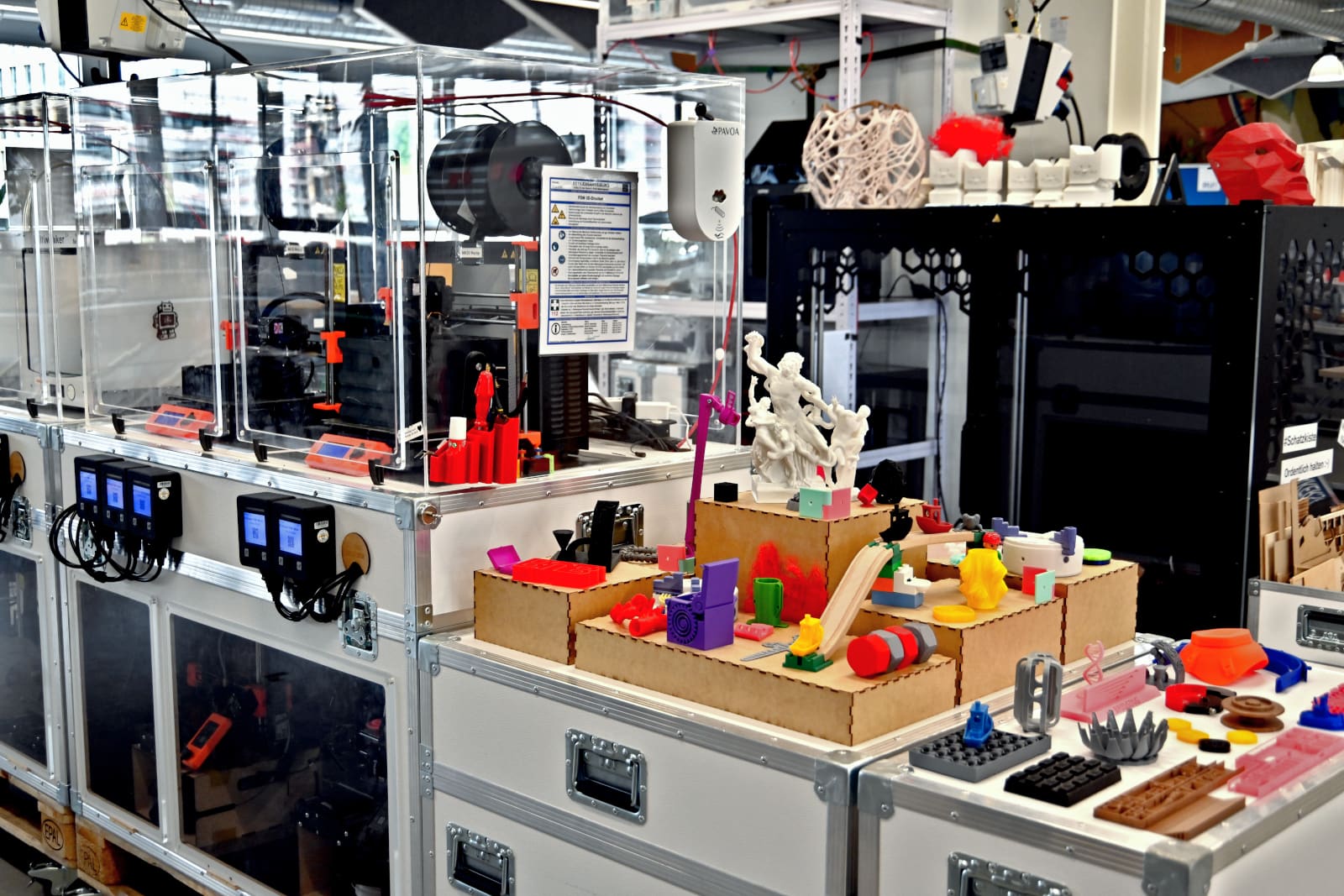
Our devices (links lead to the manufacturers’ websites):
-
Makerbot Replicator+ (Build volume [mm]: 295x195x160)
-
6x Prusa Mini+ (Build volume [mm]: 180x180x180)
-
4x Prusa MK3S (Build volume [mm]: 250x210x210)
-
Ultimaker S5 (Build volume [mm]: 330x240x300)
-
Raise3D Pro2 Plus (Build volume [mm]: 305x305x605)
-
ThinkIng Large-Format 3D Printer (Build volume [mm]: 1000x1000x1000)
-
Zortrax M200 Plus (Build volume [mm]: 200x200x180)
3D Scanning
Scanning real objects to store them as digital 3D models is useful in many fields, for example for spare parts, reverse engineering, healthcare, or architecture. 3D scans are especially valuable when the precise shape of complex objects needs to be captured.
In the Makerspace, we provide several 3D scanners as well as the necessary software and hardware so you can scan and digitize objects.
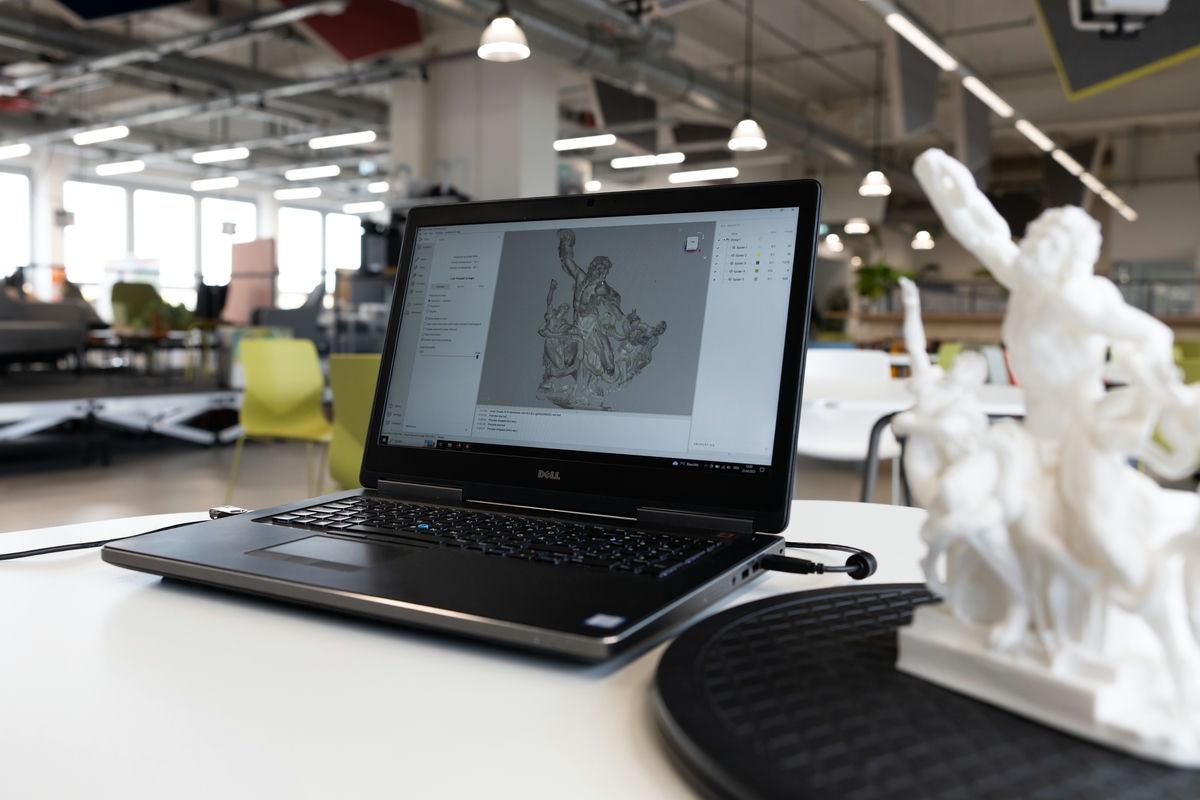
Our devices (links lead to the manufacturers’ websites):
Laser Cutting
With our laser cutters, you can precisely and quickly cut and/or engrave a wide variety of materials.
During laser cutting, a laser beam is focused through a lens onto a tiny point. When the laser light contacts the surface, its energy is converted into heat. This heat raises the material temperature so much that it vaporizes or burns, allowing it to be removed. In this way, precise outlines or relief-like engravings can be created in a short amount of time.
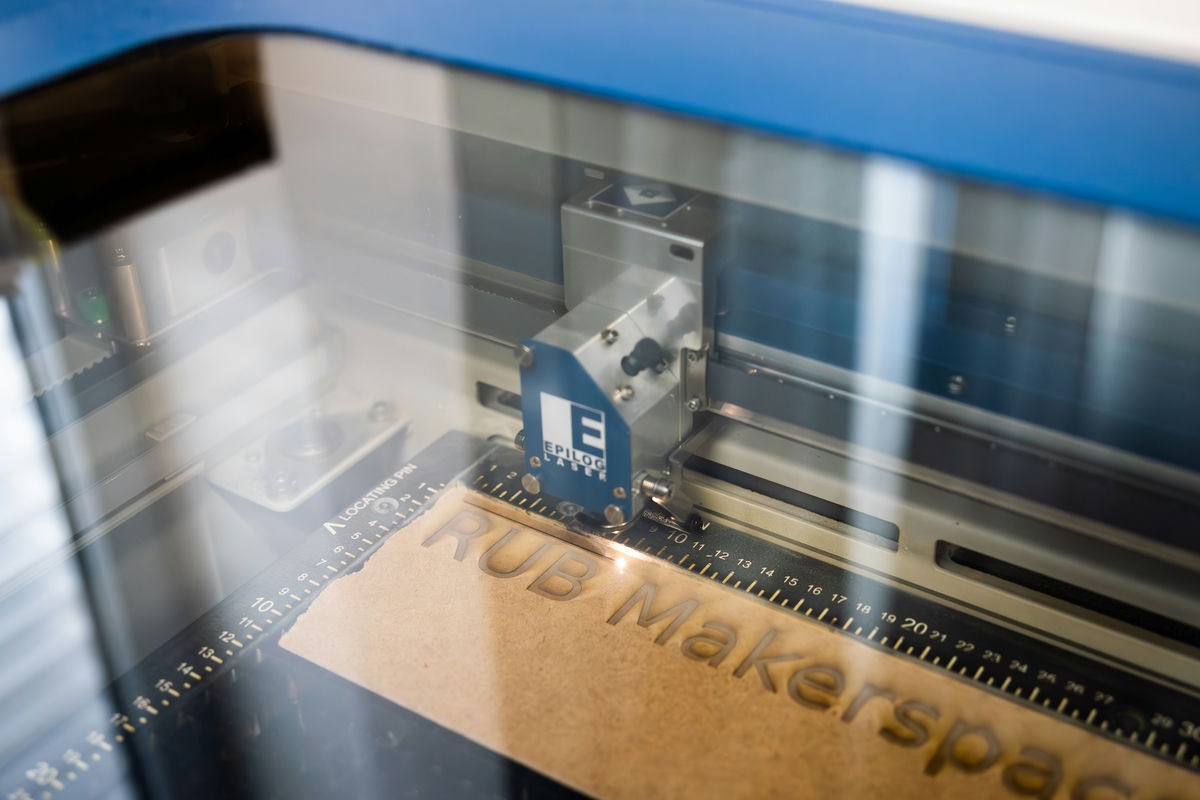
Our devices (links lead to the manufacturers’ websites):
- Epilog Fusion M2 40 CO2 Laser (Build volume [mm]: 1016x711x362, Resolution: 75–1200 dpi)
- Emblaser 2 (Build volume [mm]: 500x300x50, Resolution: 1200 dpi)
Mixed Reality (Extended and Virtual Reality)
Mixed reality describes situations in which our naturally perceived reality is enhanced with artificially computer-generated signals or elements. So far, these elements are mostly visual, though audio components are also common. Within the mixed reality spectrum, we mainly distinguish between virtual reality (VR) and augmented reality (AR).
VR describes a completely enclosed virtual environment that at least replaces the visual signals of our natural surroundings. AR, on the other hand, supplements our real field of view with hologram-like visualizations to provide additional information.
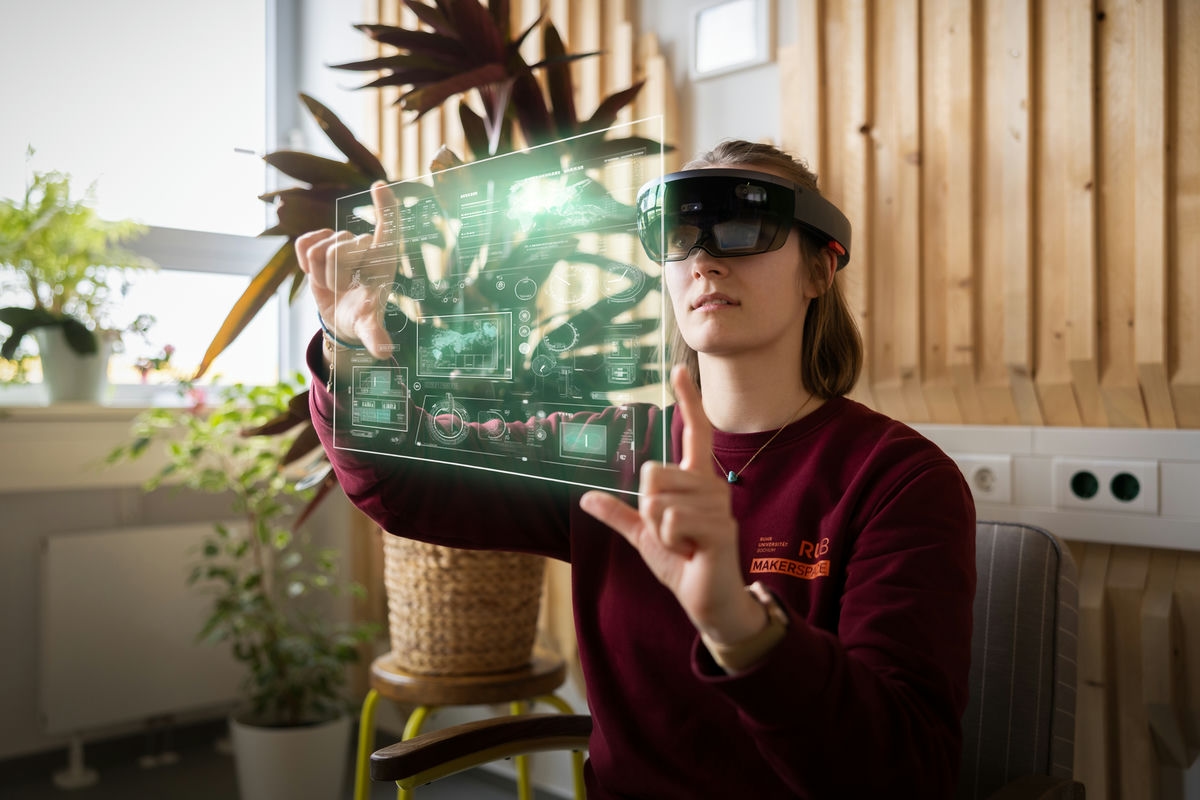
Our devices (links lead to the manufacturers’ websites):
- 2x Hololense I
- 2x Acer MR Kit
- 2x Valve Index VR Kit
- High-performance computer workstations to operate the MR devices appropriately.
Printing and Plotting
Here you have access to both a large-format inkjet plotter and various smaller devices for laminating, punching, or cutting.
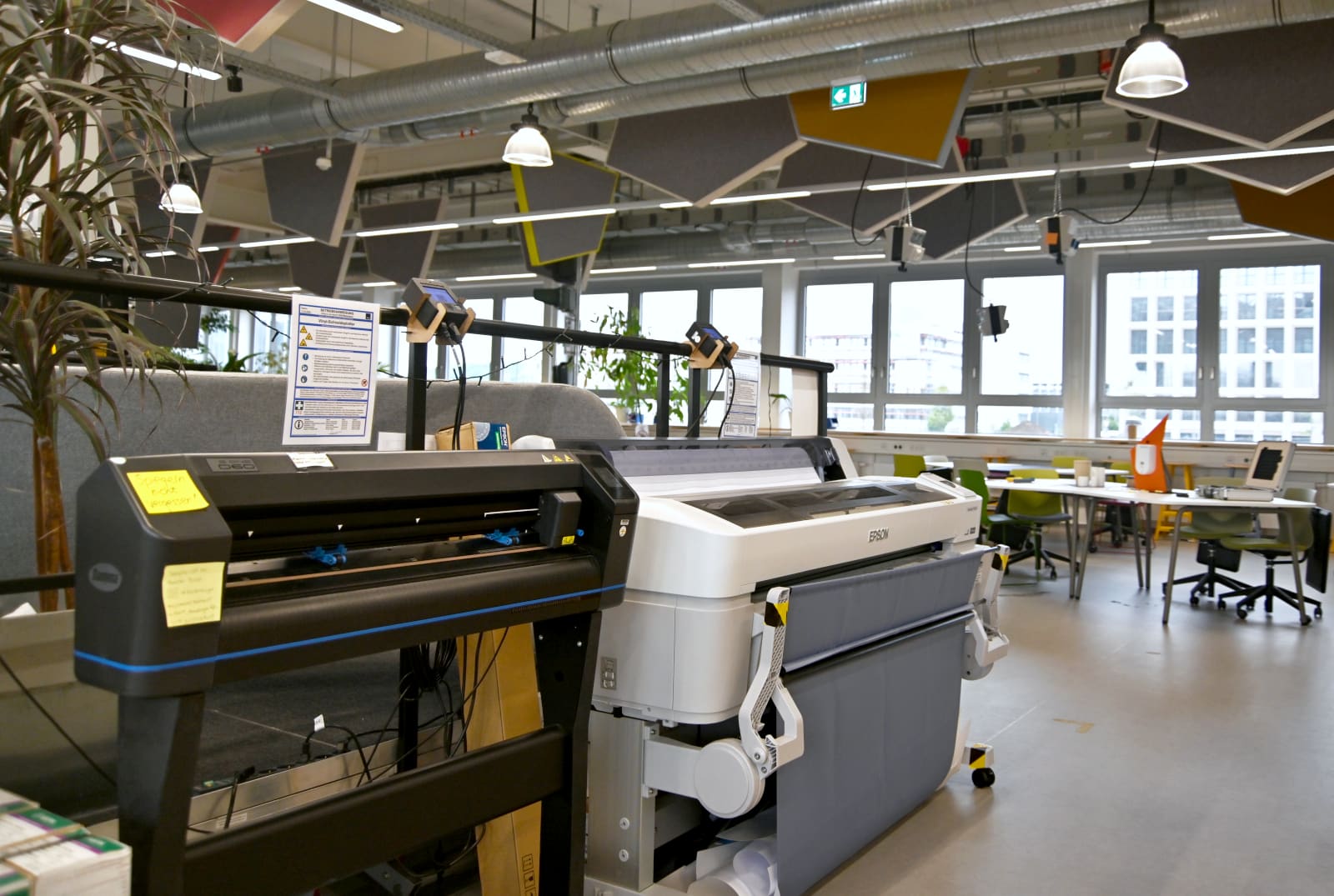
Our devices (links lead to the manufacturers’ websites):
- Summa S One D60 (Vinyl cutting plotter)
- Epson SC-T7200
- LMG Autolam Laminator 2630 (up to A3)
- Equipment and accessories for spiral binding
- Various knives, rulers, manual cutting machine, cutting mats, and more
Lizenz: Creative Commons - Namensnennung - Weitergabe unter gleichen Bedingungen - 4.0 International
Quellenangabe als: "Titel, RUB-Makerspace-Team, CC BY-SA 4.0"
Für Zitate oder Material aus Fremdquellen gilt die Lizenz der Quelle.