



Wood Workshop
Training sessions by appointment only
The wood workshop does not have regular dates for training sessions or workshops.
For usage inquiries, feel free to call me.
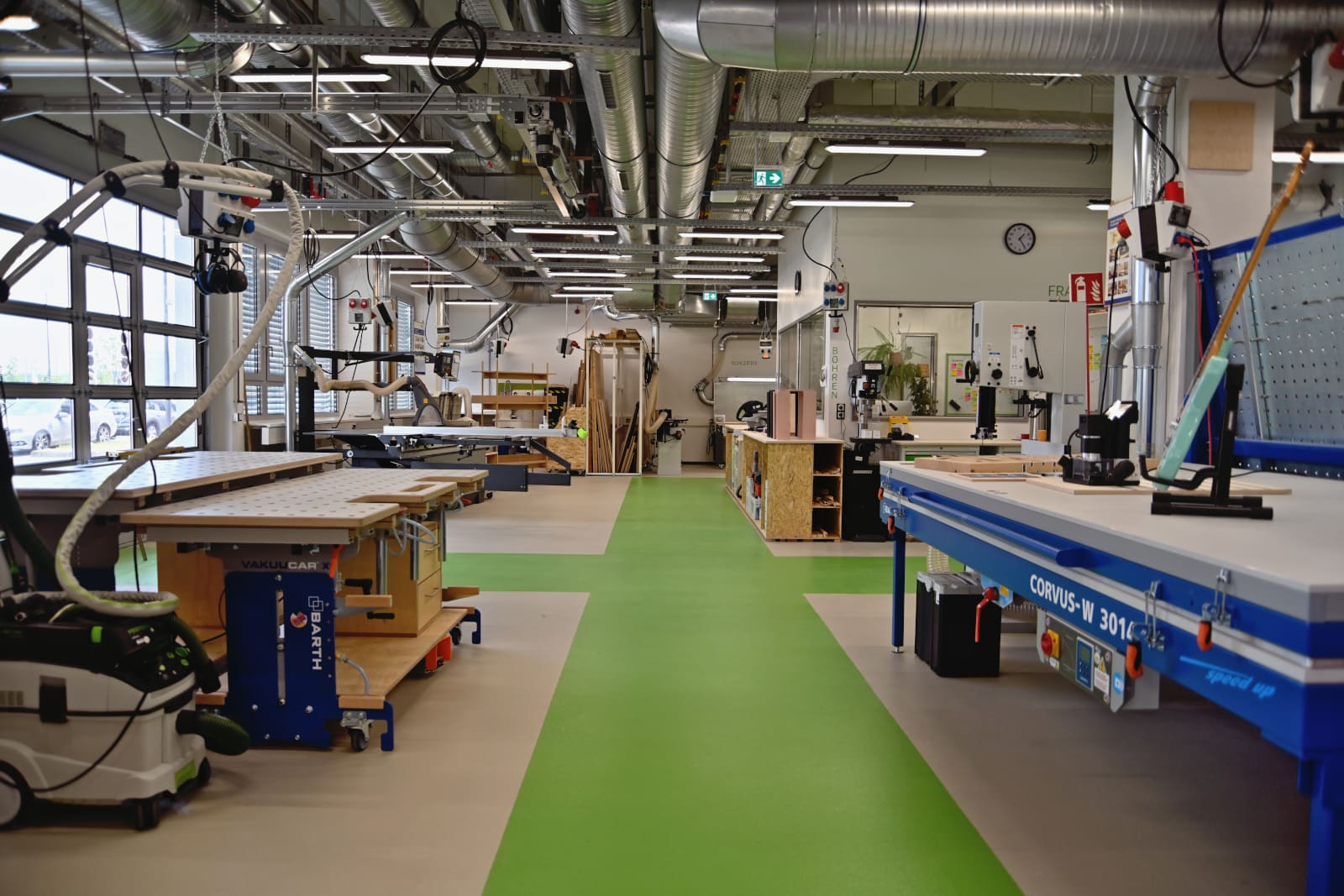
As the name suggests, everything in our wood workshop revolves around working with wood. Here you can use our machines to bring your ideas to life through woodworking and carving. We provide equipment for drilling, milling, sawing, and sanding, allowing you to create things such as a guitar body, an enclosure for your prototype, or decorative items.
Who is the contact person for the wood workshop?
title: Anna-Lena Zinnhardt
Anna-Lena Zinnhardt

"Hi, I’m Anna-Lena, and you’ll probably meet me most often in the wood workshop. I already wanted to become a carpenter as a teenager, but I spent a bit longer figuring things out. I enjoy building and tinkering with all kinds of projects and look forward to supporting you with your ideas.
"It always seems impossible until it’s done." – Nelson Mandela.
- For general inquiries, you can contact our team here.
- For specific questions, you can reach me directly at:
- Or give me a call: 01517 0406529
- 1984–2004: Baby, child, teenager, school, A-levels, and partying
- 2004–2005: Voluntary Ecological Year (FÖJ) at Schutzstation Wattenmeer on Föhr
- 2005–2014: Studying, working, studying, partying, studying, side jobs, studying, sleeping
- 2014–2017: Apprenticeship as a carpenter at timbercraft (https://www.timbercraft.de)
- 2017–2020: Carpenter at Gierse&Saße (http://tischlerei.nrw)
- Since 2021: Head of the wood workshop at the RUB Makerspace
- I have also been a mother since 2018 and have been trying to balance work and family ever since
How to use the wood workshop
Have you already completed the general safety briefing for the makerspace? Great — that’s the first step done.
After a short workshop introduction, you can move around freely in the wood workshop and start working with various hand tools at the manual workstations. If you would like to take the workshop introduction or a machine-specific training, just let us know on site or send us an email.
After completing the hand tool safety training, you are allowed to use the handheld machines on a wide range of materials. In addition to wood, this also includes engineered wood, some plastics, solid surface materials, and many others.
Everyone has their own ideas when it comes to implementing a project. Think about which materials are best suited for your project and bring them with you in advance. If you are unsure, we are happy to help.
For small items like template materials or a few screws, we can usually find something in our #treasure chest if needed.
Go to the “Wood Workshop” working folder with additional documents
In this folder you will find everything you need to know about our machines and equipment, as well as their safe operation. It also contains user manuals, operating instructions, tutorials, and other useful resources. As always: together we are stronger — we welcome every contribution to our shared knowledge and experience collection!
What you can do in the wood workshop
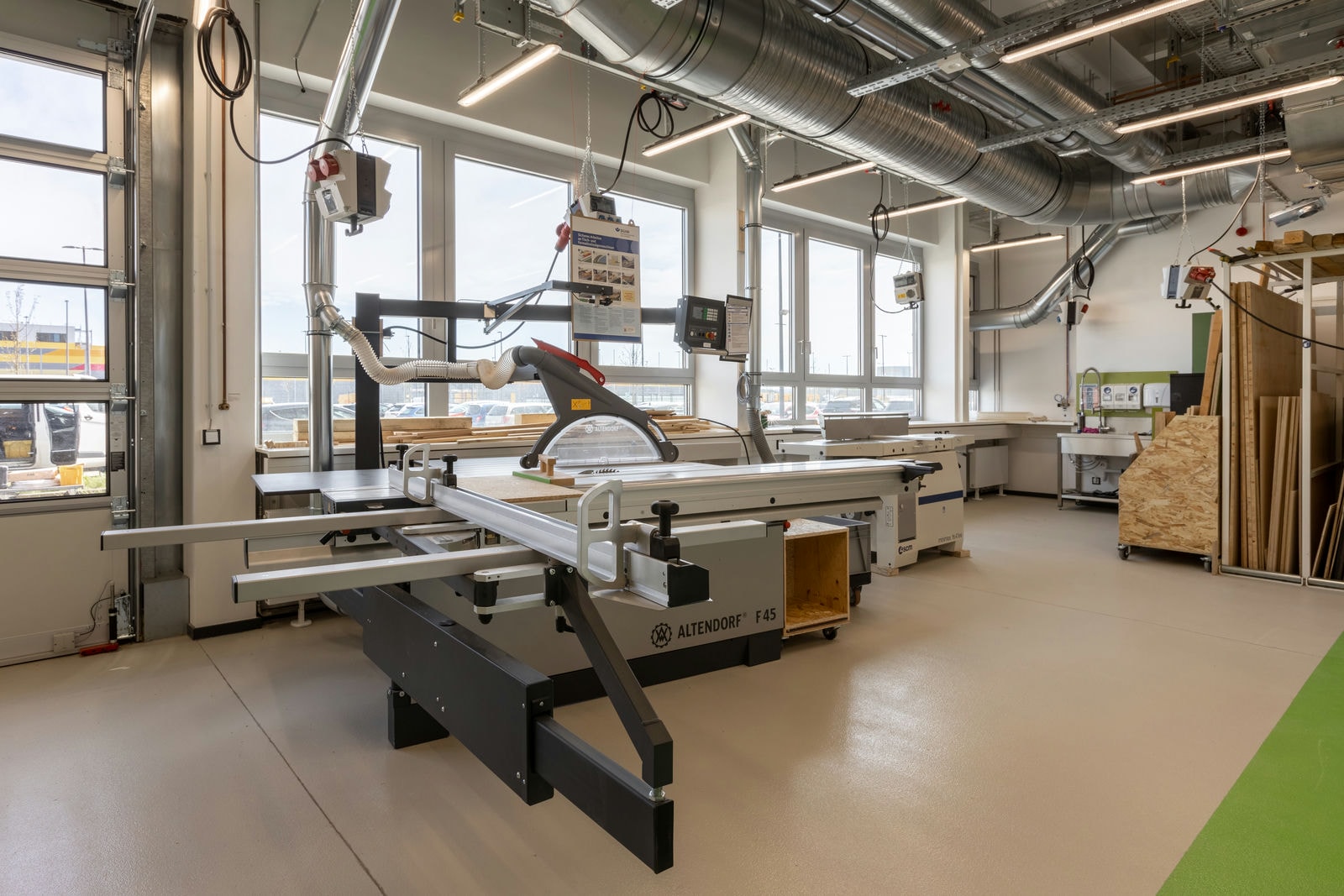
In the wood workshop you can work at our workbenches and will find everything you need for building projects. If your project is too large or you would like to work with a view of our courtyard, you can of course also use the assembly zone. Otherwise, the wood workshop offers all the tools you need for woodworking — from jointer planes to drill guides.
- Sawing sliding table saw, handheld and plunge circular saws, jigsaws
- Milling router, edge router, dowel joiner
- Drilling drill press
- Sanding random orbital sander, delta sander, sanding table
- CNC machining almost automatic — or with a bit of manual work
- Planing or jointing
- And much more. Get inspired!
To use our large machines, more extensive training is required. But once we are confident that you can work safely, you’re good to go.
Below you will find a detailed description of the individual areas.
Sawing
The sliding table saw is the centerpiece of any carpentry shop — including ours. Depending on your project, you also have access to a band saw, plunge saw, miter saw, or scroll saw.
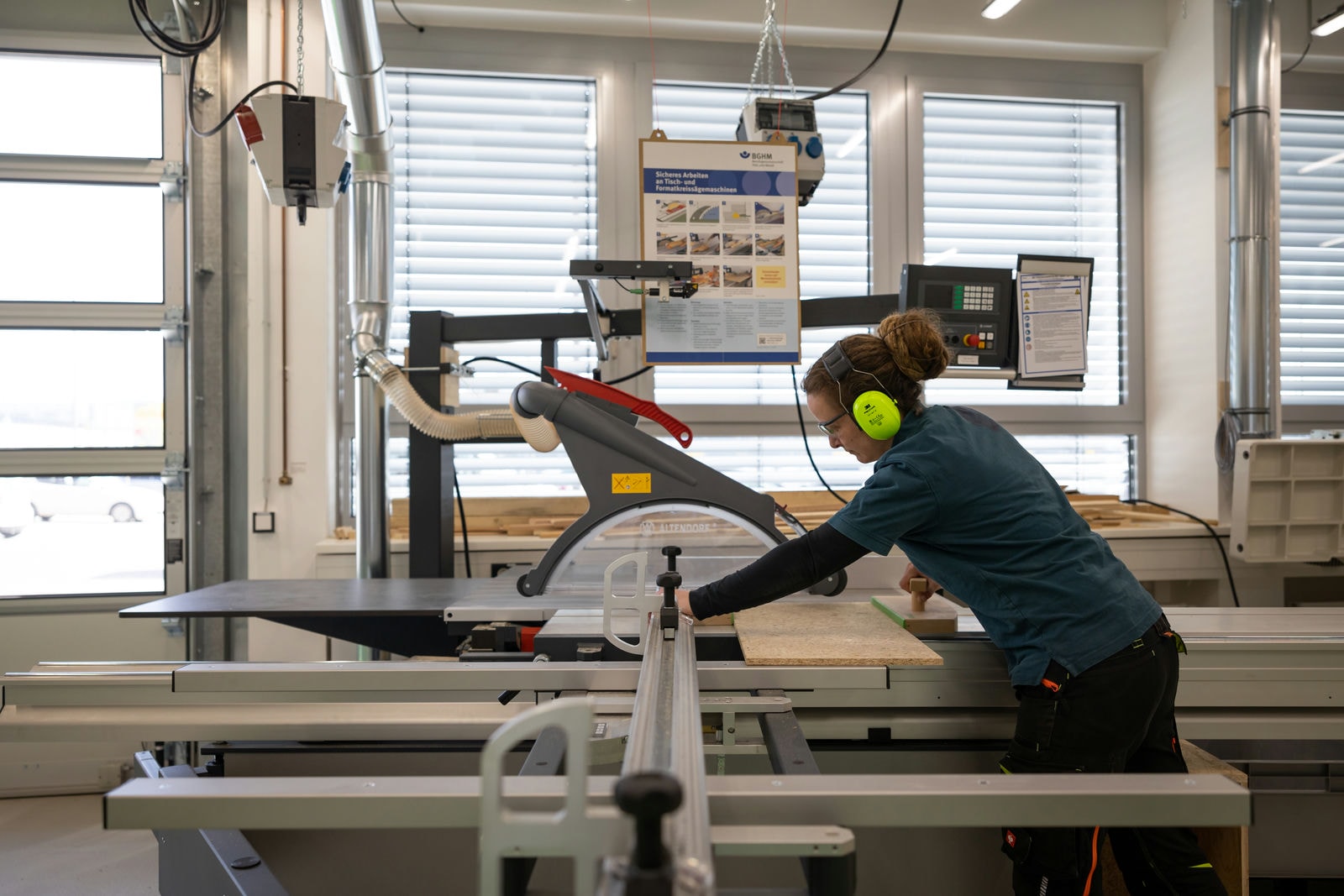
Our equipment (links lead to the manufacturers’ websites):
-
Altendorf F45
Whether large panels, narrow strips, or miter cuts — this saw can handle it.
Milling
Would you like to mill a contour or create joints for your furniture? Our workshop provides various routers for this purpose. With the router you can cut circular shapes or, like with the edge router, machine edges. The dowel joiner allows you to connect workpieces. For more complex projects, you can also work with the CNC routers or our Shaper. More details can be found in the section below.
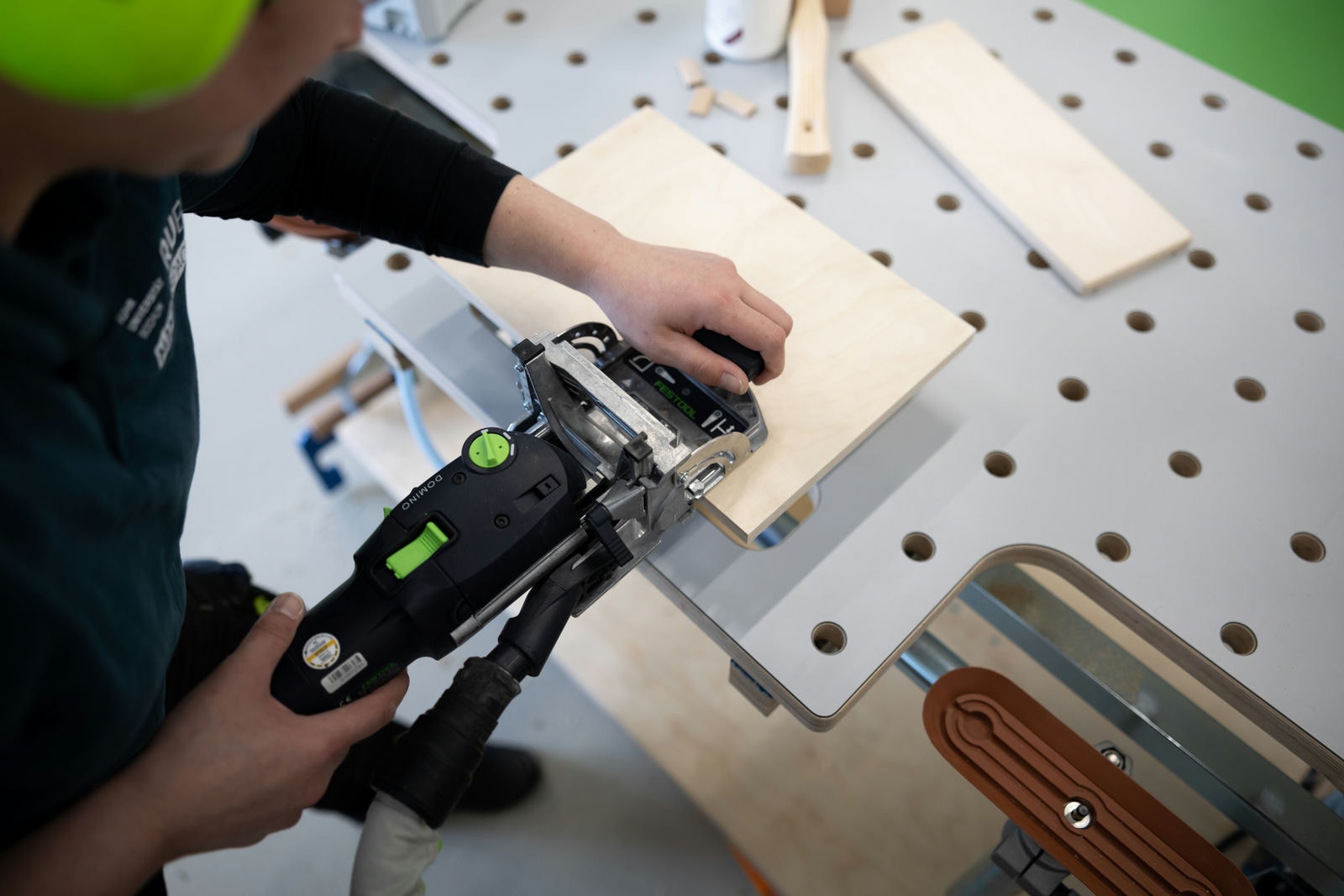
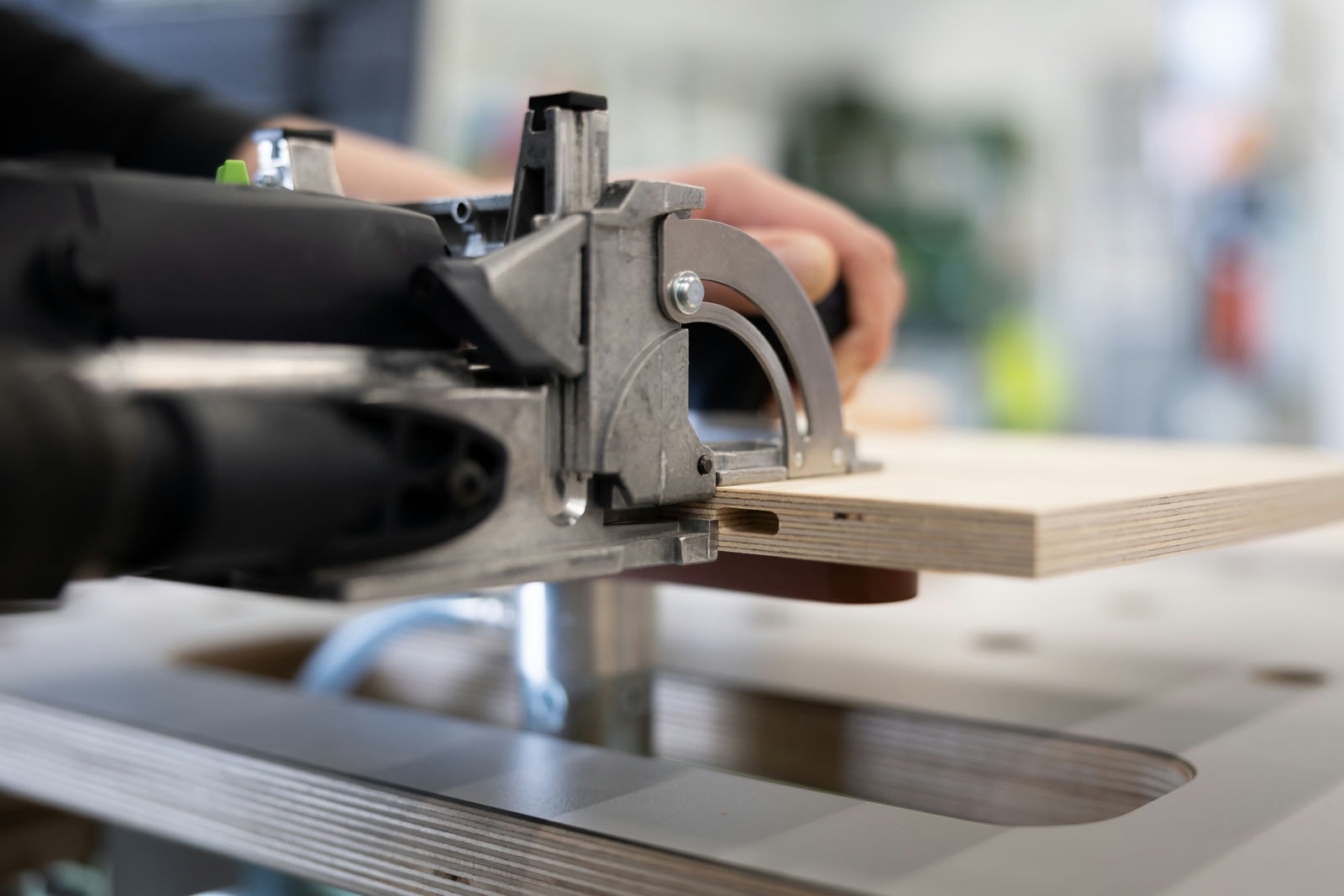
Our equipment (links lead to the manufacturers’ websites):
Drilling
Whether cordless drill drivers or a drill press — you will find a wide range of drilling machines, tools, and accessories here.
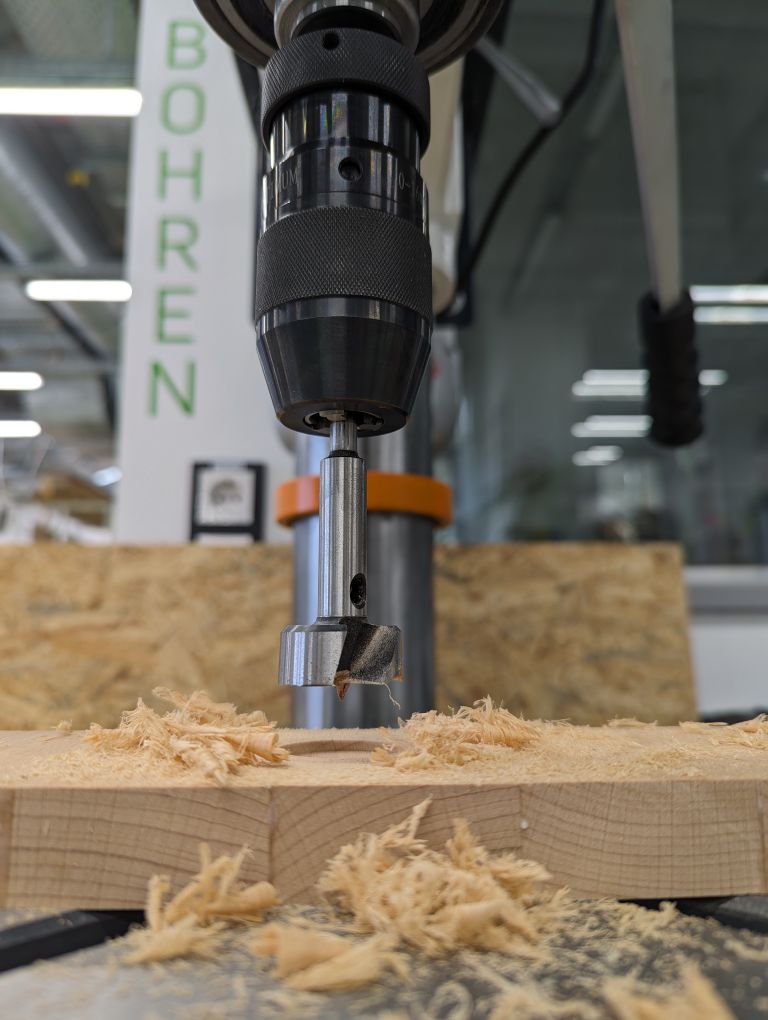
Our equipment (links lead to the manufacturers’ websites):
Sanding
Before you can varnish, oil, or stain your workpiece, it must of course be sanded. Various handheld machines are available for use at our dust-extracted sanding table. Vacuum clamps help you securely fix your workpiece so it can be processed from all sides.
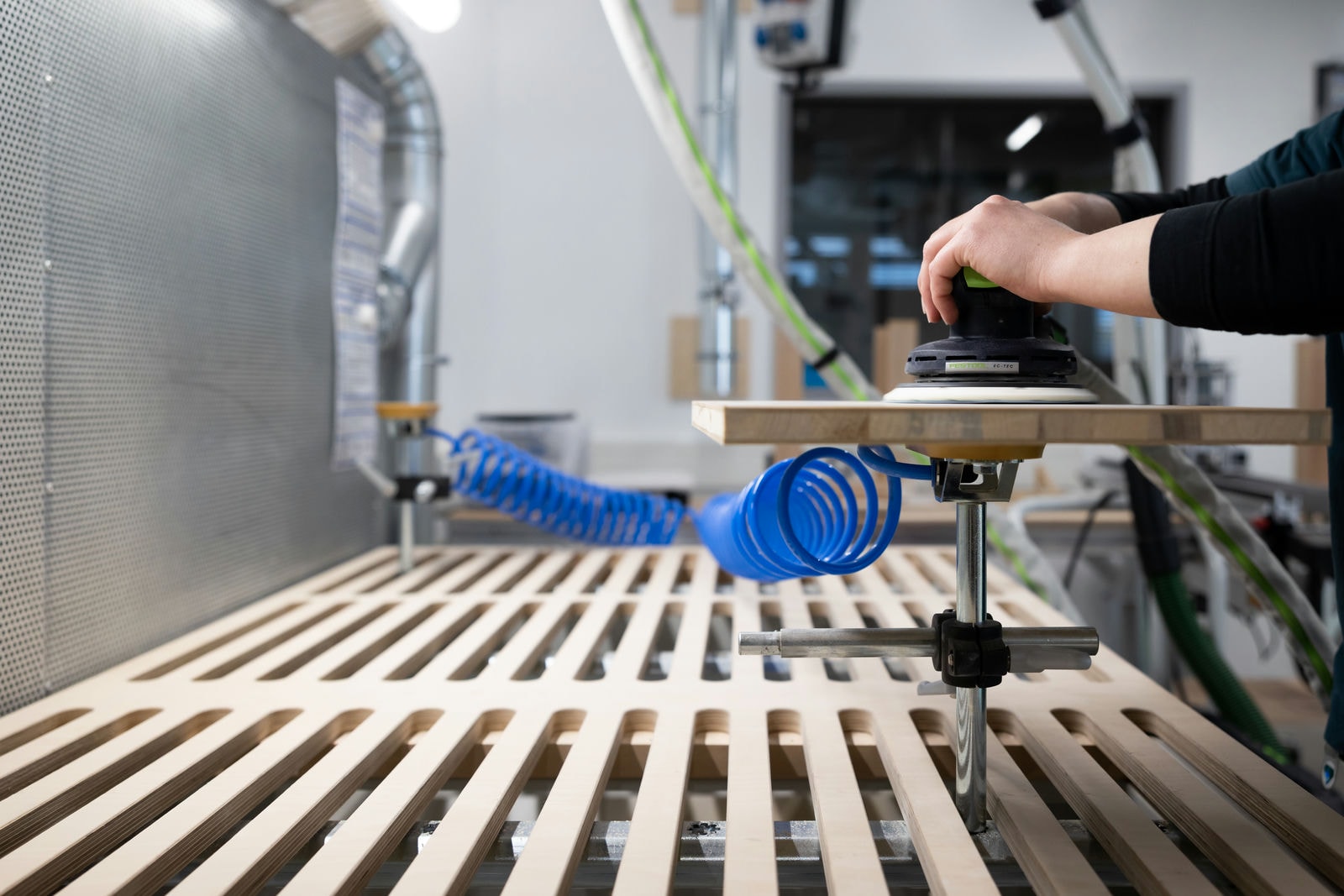
Our equipment (links lead to the manufacturers’ websites):
-
Cordless Angle Grinder Festool AGC 18
Actually more intended for metalworking, but occasionally used here as well. -
Edge Sanding Machine: KSO 1500 (illustration similar)
-
Or by hand
Either way, preferably at our dust-extracted sanding table.
CNC
CNC milling is a type of computer-controlled manufacturing. During milling, a cylindrical cutting tool is used that can rotate in different directions. Unlike traditional drilling, a milling cutter can move along multiple axes.
In general, CNC milling is highly efficient for prototyping, small-batch production of complex parts, and the manufacturing of precision components.
To work with our SmartBench (Yeti), more intensive training is required regarding handling, as speed and cutter selection must be precisely matched to your project and material.
You will also need a digital design of the desired part, created using suitable CAD/CAM software. This file defines the dimensions and geometry of the finished part. Once you have transferred the file, you can start the automated control of the milling machine using the touchscreen.
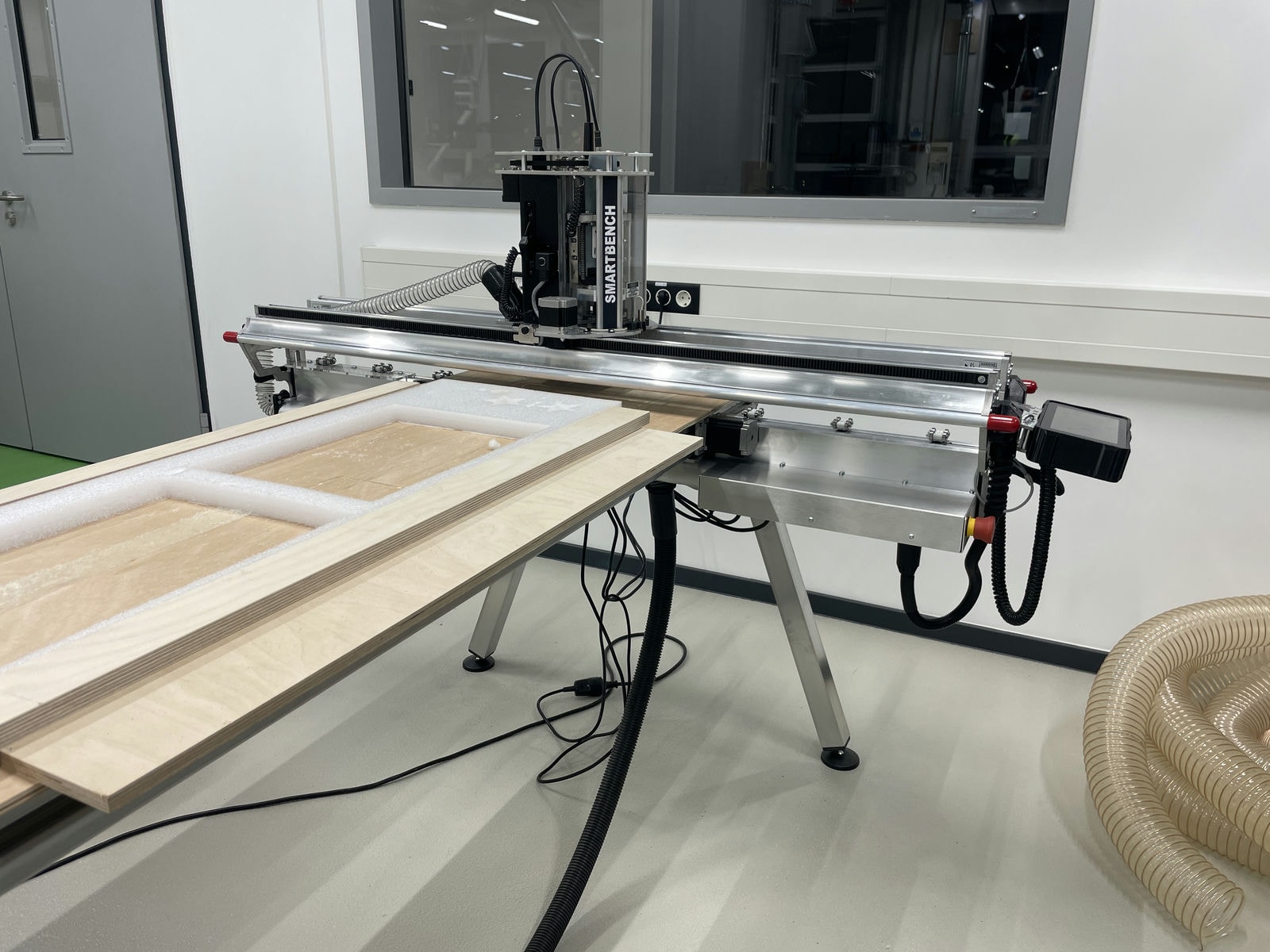
SmartBench Precision Pro
Our equipment (links lead to the manufacturers’ websites):
Shaper Origin
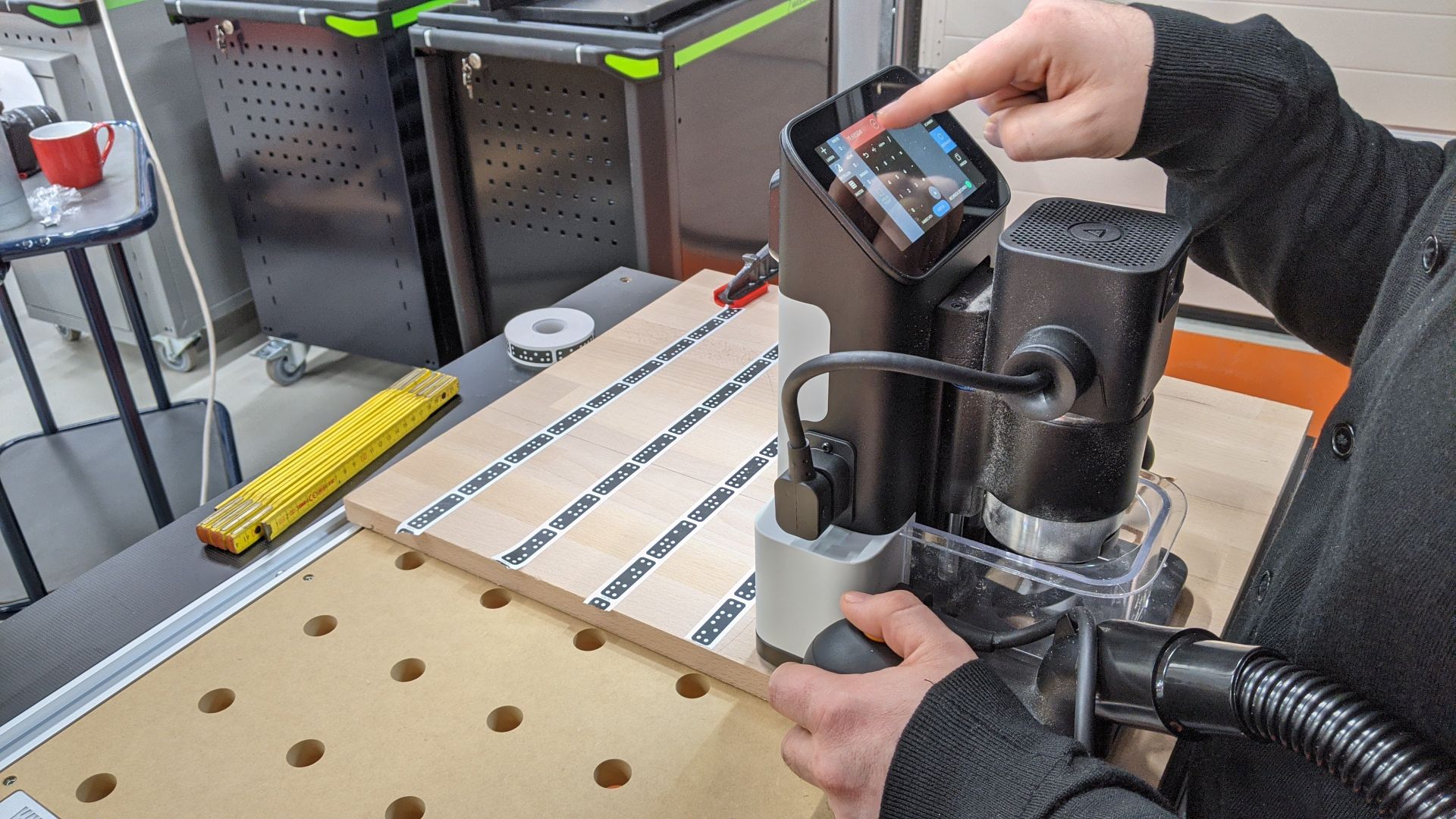
Are you interested in CNC-based woodworking? Then working with the Origin is exactly right for you. As a combination of a router and CNC machine, it is highly versatile and offers an accessible entry into CNC thanks to its intuitive user interface. In addition to creating simple geometries using the onboard CAD, external data creation with Inkscape, Autodesk Fusion 360, and many other vector graphics programs is also possible. All the Origin needs is a cleanly prepared SVG file. This combination of flexibility and comparatively simple data preparation makes the Origin the perfect machine for prototype development.
Planing
Planing is particularly suitable for solid wood. If you want a more rustic look, for example, you can turn a rough-sawn board into a finished shelf board here.
Our equipment (links lead to the manufacturers’ websites):
And much more
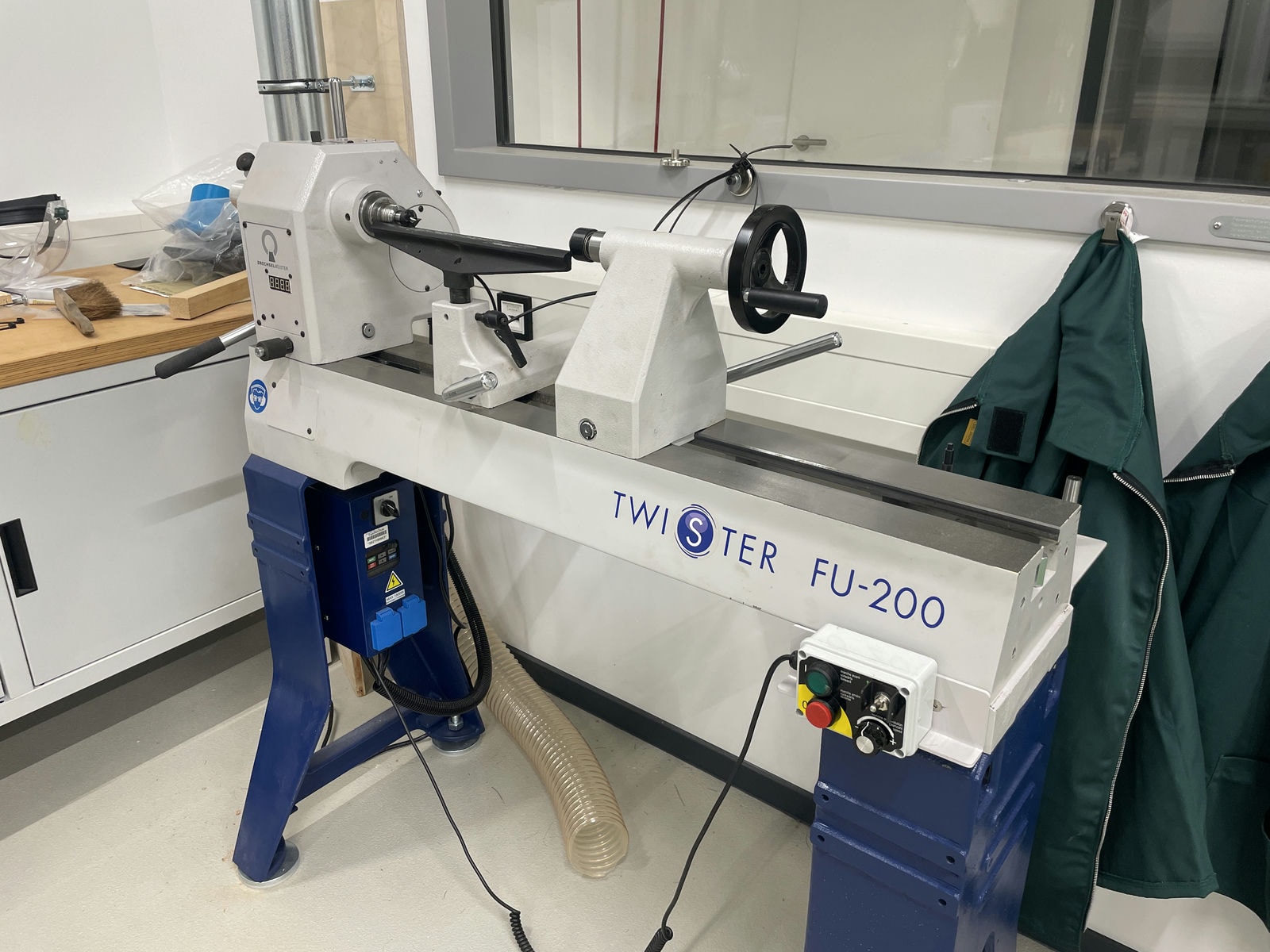
We look forward to teaching you additional processing methods such as woodturning in future workshops.
Our equipment (links lead to the manufacturers’ websites):
Lizenz: Creative Commons - Namensnennung - Weitergabe unter gleichen Bedingungen - 4.0 International
Quellenangabe als: "Titel, RUB-Makerspace-Team, CC BY-SA 4.0"
Für Zitate oder Material aus Fremdquellen gilt die Lizenz der Quelle.